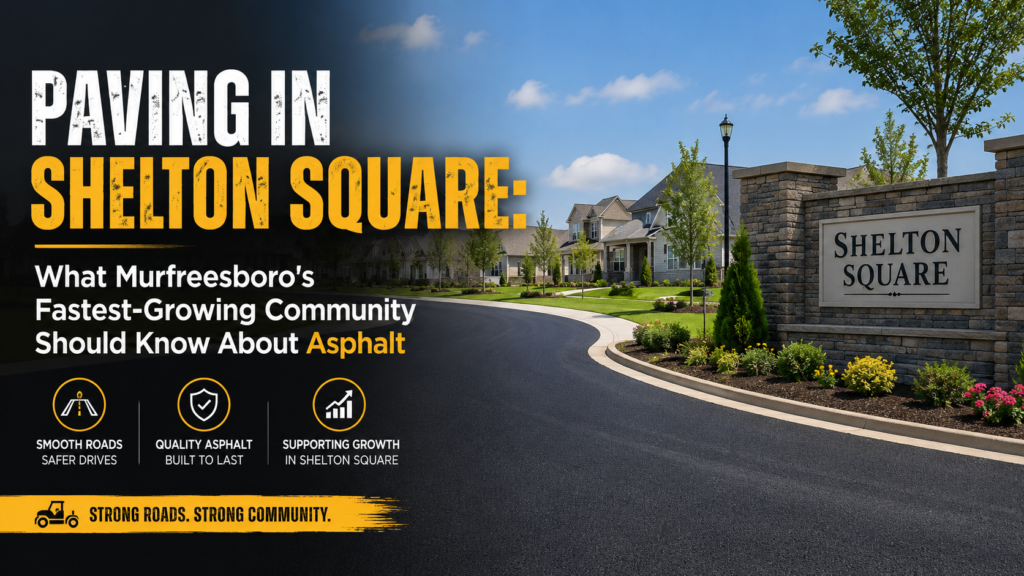
Shelton Square is one of Murfreesboro’s most dynamic and rapidly growing residential communities a master-planned neighborhood in the sought-after Blackman area that blends resort-style amenities, beautifully designed homes, and a strong sense of community. Planned for over 770 homes across more than 240 acres, it represents one of the most ambitious residential developments in Rutherford County’s history. As homes continue to be built and families settle in, the paving and pavement maintenance needs of this thriving community become increasingly important for property owners and HOA managers alike.
Whether you are a homeowner in Shelton Square focused on maintaining your driveway’s appearance and structural integrity, a property manager overseeing shared community Paving contractor Shelton Square assets, or a business owner with a nearby commercial parking surface, understanding how asphalt paving and maintenance works in Middle Tennessee’s climate is genuinely useful knowledge. This guide covers the full landscape of paving services relevant to the Shelton Square community from understanding what asphalt is and how it is installed, to the maintenance practices that determine how long it lasts.
Asphalt in a Growing Residential Community
New residential communities like Shelton Square generate significant paving activity. As each phase of a master-planned development is built out, driveways are poured, access roads are laid, parking areas are established, and community infrastructure is paved. The quality of the paving installed during construction, and the maintenance it receives in subsequent years, directly determines how long those surfaces serve the community well.
In a neighborhood like Shelton Square where homes are selling in the high $500,000s and above, and where curb appeal and community presentation are central to residents’ expectations the condition of paved surfaces matters both practically and aesthetically. A well-maintained driveway signals a well-cared-for home. A deteriorating parking area in a community amenity zone reflects poorly on the development as a whole.
For residents of newer homes, understanding the maintenance timeline for their driveway when to apply the first sealcoat, when to fill emerging cracks, and how to recognize signs that professional attention is needed is part of responsible homeownership. The good news is that with proper care, an asphalt driveway installed in a new Shelton Square home can be expected to perform well for 20 years or more.
What Asphalt Is and Why It Is Used for Residential Paving
Asphalt pavement is a mixture of aggregate materials crushed stone, gravel, and sand bound together with bitumen, a petroleum-derived binding agent. When properly formulated, mixed at the correct temperature, laid to the appropriate thickness, and compacted to the specified density, asphalt creates a flexible, durable, and weather-resistant surface suitable for driveways, parking areas, roadways, and pedestrian paths.
For residential driveways, asphalt is a widely preferred material for several practical reasons. It is generally less expensive to install than concrete for equivalent coverage areas. It is more forgiving of the minor ground movement and settlement that occurs in residential settings, as its flexibility allows it to accommodate minor shifts without the joint cracking that can affect rigid concrete slabs. It is also relatively easy to maintain and repair cracks and minor damage can be addressed without replacing the entire surface.
Asphalt’s dark color is both a functional and aesthetic consideration. In colder weather, the dark surface absorbs solar heat, which helps melt snow and ice more quickly than lighter surfaces would. Aesthetically, the deep black of freshly applied or recently sealcoated asphalt presents a clean, polished appearance that enhances a home’s curb appeal.
One important characteristic of asphalt that Shelton Square residents should understand is that the material is not static it is a living surface that interacts continuously with its environment. UV radiation, temperature changes, moisture, and vehicle traffic all influence asphalt’s condition over time. This is why proactive maintenance is not merely optional but essential to realizing the full service life of any asphalt surface.
How Tennessee’s Climate Affects Asphalt in Shelton Square
Middle Tennessee’s climate presents a specific set of challenges for asphalt pavement that paving professionals in the Murfreesboro area understand well. The region experiences four distinct seasons, with hot and often humid summers, mild springs and falls, and winters that regularly bring freezing temperatures and with them, the freeze-thaw cycle that is among the most damaging natural forces acting on paved surfaces.
The Freeze-Thaw Cycle: In Murfreesboro, winter temperatures frequently dip below freezing at night while rising above freezing during the day. This repeated cycling causes water that has infiltrated any existing crack or surface void in asphalt to alternately freeze and expand, then thaw and contract. Each cycle widens and deepens existing cracks, progressively compromising the structural integrity of the pavement from within. A small crack visible in autumn can expand dramatically over a single winter, and if left unaddressed, the base beneath the pavement can become weakened, leading to pothole formation.
Summer Heat: Middle Tennessee summers bring sustained high temperatures that can soften asphalt’s surface binders, making the pavement temporarily more susceptible to rutting under the weight of vehicles particularly where turning movements concentrate load in specific areas. Quality asphalt mix design accounts for this by using binder grades appropriate for the regional climate.
Rainfall and Drainage: Tennessee receives moderate to significant annual rainfall, and proper drainage design is critical to the longevity of any paved surface. Water that pools on or runs beneath pavement is among the primary drivers of premature deterioration. New construction in Shelton Square incorporates drainage considerations, but ensuring that downspouts, grading, and surface drainage continue to direct water away from paved surfaces is an ongoing maintenance responsibility for homeowners.
UV Radiation: Tennessee’s sun exposure, while not as extreme as in desert climates, still drives oxidation of asphalt binders over time. This is the process by which the binding material gradually loses its flexibility, causing the surface to fade from black to gray and become increasingly brittle. Sealcoating directly addresses UV oxidation by providing a protective barrier that slows this process significantly.
Sealcoating: The Most Important Maintenance Service for Shelton Square Driveways
Of all the maintenance services available for asphalt pavement, sealcoating delivers arguably the greatest return on investment for residential property owners. Applied as a liquid coal tar or asphalt emulsion to an existing asphalt surface, sealcoat creates a protective layer that addresses multiple drivers of asphalt deterioration simultaneously.
UV Protection: Sealcoat significantly reduces the rate at which UV radiation oxidizes asphalt binders, preserving the flexibility and binding strength of the pavement beneath and dramatically extending surface life.
Water Resistance: By filling fine surface voids and cracks, sealcoat reduces water infiltration into the pavement structure directly limiting the freeze-thaw damage cycle that is a primary concern in Middle Tennessee winters.
Chemical Resistance: Vehicle fluids engine oil, transmission fluid, gasoline, and brake fluid can chemically attack and soften asphalt binders. Sealcoat creates a resistant surface layer that prevents these substances from penetrating the pavement.
Appearance: Freshly applied sealcoat restores the deep black color of asphalt, renewing the visual appeal of a driveway and contributing to the overall curb appeal of a Shelton Square home.
Timing matters with sealcoating. For new asphalt driveways in Shelton Square, paving professionals typically recommend waiting at least six to twelve months after installation before applying the first sealcoat. This waiting period allows the asphalt to fully cure and the volatile oils in the fresh mix to evaporate sealing too soon can trap those oils and interfere with proper curing. After the initial application, sealcoating every two to four years depending on traffic exposure and sun conditions maintains protection and appearance.
Sealcoating should always be applied to a clean, dry surface. Any existing cracks should be filled before sealcoat is applied, as sealcoat does not fill structural cracks and applying it over them seals in moisture rather than keeping it out.
Crack Filling and Crack Sealing
Cracks in asphalt pavement are inevitable. Over time, the combination of thermal expansion and contraction, the freeze-thaw cycle, and the gradual oxidation of surface binders will produce cracking in even well-installed and well-maintained asphalt. The key is to address cracks while they are still small and before water infiltration has compromised the base.
Crack filling is the application of a flexible filler material into non-working cracks those that do not experience significant horizontal movement. Crack sealing, technically a more robust process, uses hot-applied rubberized sealant that remains flexible through the seasonal pavement expansion and contraction cycle, providing a longer-lasting seal in working cracks.
Both processes involve cleaning the crack of any debris, vegetation, or loose material before the filler or sealant is applied. This preparation step is critical any contamination in the crack will prevent proper adhesion and result in premature failure of the repair.
For Shelton Square homeowners, addressing cracks promptly ideally before each winter season is one of the most effective actions available to prevent the freeze-thaw cycle from turning small surface cracks into significant structural failures over the following months.
Cracks that have progressed to alligator cracking the interconnected network of surface fractures that resembles the scales of an alligator indicate that the underlying base has failed and that surface treatment alone is insufficient. This type of deterioration requires removal and replacement of the affected section, not surface sealing.
Parking Lot Striping and Line Marking in Shelton Square
Beyond residential driveways, Shelton Square’s community amenities including pool areas, event spaces, and shared parking require properly marked pavement for both functionality and safety. Pavement markings and line striping serve as the visual communication system that organizes vehicle and pedestrian movement in shared spaces.
Clearly marked parking stalls maximize available parking capacity by ensuring consistent, organized vehicle placement. Directional arrows and traffic flow markings reduce confusion and the risk of vehicle conflicts. Pedestrian crosswalk markings protect residents and visitors on foot as they navigate between parking areas and community facilities. ADA-compliant accessible parking stalls, access aisles, and associated signage ensure that the community’s facilities are accessible to all residents and their guests.
Pavement markings fade over time due to UV exposure, weather, and traffic wear. In Middle Tennessee’s climate, striping in high-traffic areas may need to be refreshed every one to three years to remain clearly visible and compliant. As part of a comprehensive pavement maintenance program, re-striping is typically coordinated with sealcoating, since fresh sealcoat provides an ideal surface for new markings.
The process for professional line striping involves cleaning the pavement surface, laying out the marking positions using string lines or chalk, and applying paint or thermoplastic marking material using specialized striping equipment that ensures crisp, precise lines. For ADA-compliant symbols and markings, precision is particularly important both for compliance and for visibility.
Pothole Repair: Addressing Deterioration Promptly
Potholes represent the advanced stage of the deterioration process that begins with surface cracking and progresses through base weakening to surface collapse. In the context of a residential community like Shelton Square, potholes in driveways, alley access surfaces, or community parking areas create both safety hazards and property liability concerns.
Pothole repair methods range in permanence and application. Cold mix patching filling the void with a pre-mixed cold asphalt material and compacting it is a temporary repair suitable for addressing hazardous conditions when permanent repair is not immediately practical. Semi-permanent patching involves more thorough preparation of the pothole edges and base before hot or cold mix asphalt is compacted into the void. Full-depth patching, in which the failed pavement and compromised base material are excavated and rebuilt, is the appropriate approach for large or structurally compromised areas and represents a permanent repair.
The right repair method depends on the size and depth of the pothole, the condition of the surrounding pavement, the cause of the failure, and the intended service life of the repair. A knowledgeable paving contractor will assess these factors and recommend the approach that provides the best long-term outcome for the specific situation.
For Shelton Square residents and community managers, the practical lesson is simple: address pavement defects including small cracks, minor depressions, and early-stage deterioration before winter arrives. The freeze-thaw cycle will reliably accelerate any existing damage, and problems that are manageable in the fall can become significantly more extensive and expensive by spring.
Asphalt vs. Concrete: Understanding the Choice
Homeowners in Shelton Square who are considering a new driveway or replacement of an existing one may weigh the relative merits of asphalt and concrete. Both are viable paving materials for residential driveways, and the right choice depends on priorities related to aesthetics, maintenance, longevity, and local conditions.
Asphalt’s advantages in the Middle Tennessee context include its flexibility important for managing the freeze-thaw cycle that concrete handles less gracefully, particularly without proper joint design. Asphalt is easier and less expensive to repair than concrete when damage does occur. The material is also fully recyclable, and reclaimed asphalt pavement (RAP) from old driveways and pavements is routinely incorporated into new asphalt mixes.
Concrete offers its own advantages: when properly installed, it can last longer than asphalt before requiring major rehabilitation, and it does not soften in high heat the way asphalt can. However, concrete is generally more expensive to install initially and to repair when cracks or joint failures occur.
For most residential driveway applications in Murfreesboro particularly new construction driveways in communities like Shelton Square asphalt remains the dominant choice, reflecting both its practical performance characteristics in the local climate and its cost-effectiveness over a typical homeownership horizon.