Learn Languages Online in 2026: The Complete Beginner-to-Fluent Roadmap
The decision to learn languages online has never been easier to act on, yet the path to fluency still trips up thousands of motivated beginners every year. The problem is rarely effort. It is method. In 2026, the difference between the learners who reach conversational fluency and those who quit at month three comes down to structure, feedback, and consistent speaking practice.
This roadmap lays out exactly how to go from your first hundred words to holding a real conversation, whether you are learning English for work, Arabic for study, or French for travel. It covers realistic timelines, the tools that matter, and how a live tutor accelerates everything.
Why Learn Languages Online Instead of a Classroom?
Traditional evening classes move at the speed of the slowest learner and rarely give you enough talking time. Online study flips that. You control the pace, choose your schedule, and get far more speaking minutes per session, which is the single biggest driver of progress.
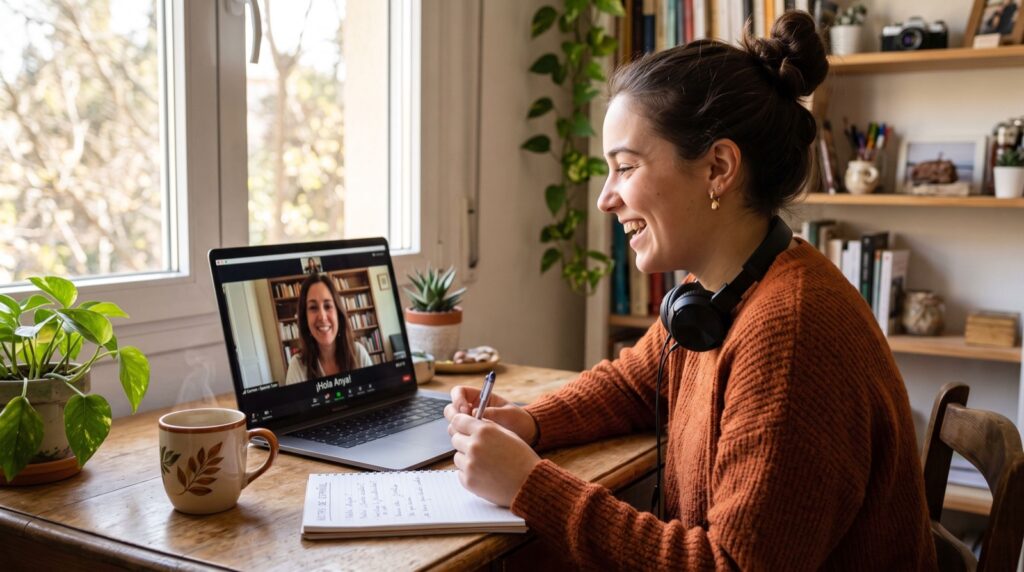
Modern platforms combine bite-sized lessons, spaced-repetition vocabulary, and one-to-one video practice with native or fluent tutors. That blend is why so many people now learn languages online rather than commuting to a fixed weekly class. You practise when your brain is fresh, not when the timetable dictates.
Cost is another factor. Digital delivery removes travel and printed materials, so the same budget buys more contact hours with a qualified teacher.
How Long Does It Take to Become Conversational?
Timelines depend on the language’s difficulty and your daily commitment. The table below gives realistic 2026 estimates for reaching a solid conversational level with steady daily practice.
| Language | Difficulty for English speakers | Daily practice | Time to conversational |
|---|---|---|---|
| Spanish / French | Easier | 30–45 min | 5–7 months |
| German | Moderate | 45 min | 7–9 months |
| Arabic / Mandarin | Harder | 60 min | 12–18 months |
| Urdu (for basics) | Moderate | 30 min | 6–8 months |
These figures assume regular speaking practice, not passive app tapping. Twenty focused minutes of conversation beats an hour of silent flashcards for building real fluency.
The Four Pillars of Fast Progress
Every effective language routine rests on four pillars. Neglect one and progress stalls. Balance all four and momentum builds naturally.
- Input: listening and reading at your level, slightly stretched.
- Vocabulary: spaced repetition so words stick long term.
- Speaking: regular real conversation with correction.
- Feedback: a tutor who fixes errors before they harden.
The fourth pillar is where self-study alone falls short. Apps cannot hear the small pronunciation mistakes that make you hard to understand. A skilled teacher can, and fixing them early saves months. Working with best tutors in Islamabad gives learners that live correction plus accountability that keeps the routine alive.
Do You Really Need a Tutor to Reach Fluency?
You can reach a basic level alone, but fluency almost always requires conversation with a person. A tutor supplies real-time feedback, cultural context, and structured pressure to speak. Just as you would hire trusted professionals for any specialist task, a qualified language teacher turns scattered effort into a clear, guided path.
A Sample Weekly Routine That Works
Consistency beats intensity. This simple weekly structure keeps all four pillars active without overwhelming a busy schedule.
- Two live tutor sessions for speaking and correction.
- Fifteen minutes of spaced-repetition vocabulary daily.
- One podcast or short video in the target language each day.
- One short journal entry weekly, reviewed by your tutor.
- One relaxed conversation with a language partner or friend.
Notice the balance of study and real use. Language is a skill, and skills grow through doing, not only through memorising rules.
Choosing the Right Method for You
Some learners thrive on grammar-first structure; others need immersion and conversation from day one. The best approach usually mixes both. The Common European Framework of Reference for Languages offers a clear ladder of levels, from A1 to C2, that helps you set concrete goals and track real progress rather than guessing.
Set a target level, pick a deadline, and reverse-engineer your weekly plan from there. A tutor can map your current level to the framework and build a realistic route to the next rung.
Staying Motivated Beyond Month Three
Motivation dips are normal and predictable. The learners who succeed plan for them. Track small wins, celebrate your first full conversation, and keep the reason you started visible. A tutor’s encouragement and a fixed weekly slot make quitting far harder than going it alone.
Immersion Without Leaving Home
You do not need a plane ticket to surround yourself with a new language. In 2026, immersion is a setting you build deliberately. Switch your phone to the target language, follow creators who post in it, and label objects around your home so everyday glances double as revision.
Passive exposure alone will not make you fluent, but it primes your ear and normalises the sounds. Pair it with active study and your brain starts recognising patterns far faster. Listening to a short news clip each morning, even one you only half understand, trains comprehension in a way textbooks cannot match.
Then bring that input into your tutor sessions. Mention the video you watched or the song you liked, and let the tutor turn it into a speaking exercise. This loop, where real-world input feeds structured conversation, is exactly how immersion works without ever leaving your city.
Frequently Asked Questions
Can I learn a language online for free?
You can build a foundation with free apps and videos, but paid tutoring dramatically speeds up speaking and pronunciation. Most successful learners combine free input resources with a few paid live sessions each week.
How much time do I need each day?
Thirty focused minutes daily beats three hours once a week. Consistency drives long-term retention, so short daily practice paired with two live sessions weekly is the ideal balance for most people.
Which language is easiest to start with?
For English speakers, Spanish and French are among the fastest to reach conversational level. Your motivation matters more than difficulty, though, so choose a language you genuinely want or need to use.
Is online learning good for children too?
Yes. Young learners often adapt quickly to interactive, game-based lessons. Short, frequent sessions with a patient tutor keep children engaged and build strong pronunciation habits early.
Conclusion
To learn languages online successfully in 2026, you need structure, daily practice, and real conversation with feedback. Balance input, vocabulary, speaking, and correction, set goals against a clear level framework, and lean on a qualified tutor when self-study stalls. Follow the roadmap consistently, and conversational fluency shifts from a distant hope to a realistic milestone within months, not years.